
Chasing the alpha through the digital fog.
On August 6, 2025, Zcash Labs was born—not as a new protocol, but as a distribution layer. The announcement landed with the quiet precision of a surgical strike: a separate entity tasked with bridging the most battle-tested privacy chain into the mainstream financial plumbing. The first pilot, zcashtocash, aims to connect Zcash to Venmo, Revolut, Cash App, Chime, Monzo, and Zelle across 100+ countries. This is not a whitepaper. This is a wireframe for institutional adoption.
But the story here is not the technology—Zcash’s zk-SNARKs have been running since 2016. The story is the organizational architecture that now backs it. Zcash Labs is the third pillar in a tripartite structure: the Zcash Foundation controls governance and community assets (domain, social accounts); ZODL (the newly formed entity after the January 2025 ECC exodus) holds the intellectual property and the Zashi wallet; and Labs now owns the commercial integration layer. This is not a reorganization. This is a redefinition of how a privacy chain can survive—and thrive—in a world where Ethereum and Solana are closing the privacy gap.
Mapping the invisible architecture of value.
To understand the gravity of this move, you need to walk through the last 12 months of Zcash’s history. In January 2025, the entire engineering team of the Electric Coin Company resigned en masse over governance disputes. The community was rattled. Three months later, on March 9, a new entity—ZODL—emerged with $25 million in funding from a16z crypto, Winklevoss Capital, Coinbase Ventures, Maelstrom, and Chapter One. The talent was retained. The codebase was preserved. But the organization was now split.
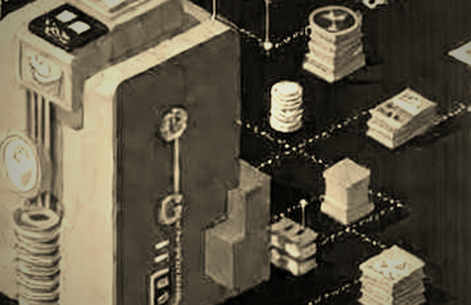
By August 2025, the split formalized into a three-organization model. The Foundation keeps the keys to the kingdom: the Zcash domain, the official social media handles, and the community treasury. ZODL continues development of the Zashi wallet and the core protocol. And Zcash Labs? It is the monetization engine. The labs operate on a retroactive funding model: they front the capital for integration projects, and if the ZEC holders vote to approve the work, the labs are reimbursed at a 20% premium. If the vote fails, the labs eat the cost.
This is not a traditional grant program. This is a high-leverage, capital-efficiency experiment. The ZEC holders now have direct allocation power over the ecosystem’s treasury—a rare form of governance that transforms a utility token into a quasi-sovereign asset. The shielded pools already hold 4.37 million ZEC (25.9% of total supply), representing roughly $2.1 billion in value at current prices. Daily shielded transactions have surged 117% year-over-year to 5,059 per day. The user base is deepening, not just expanding.
But the real innovation lies in the incentive alignment. The 20% premium ensures that Labs only succeeds when the community agrees that the project adds value. If the first pilot—zcashtocash—can demonstrate actual transaction volume flowing through these mainstream payment apps, the flywheel could spin. More integrations → more shielded transactions → more demand for ZEC as gas → higher treasury value → more funding for future integrations. This is the bullish case articulated in the source material.
Anthropology of the tokenized soul.
Yet every narrative has a shadow. The contrarian angle is that the retroactive funding model is a time bomb. The “front capital, then get reimbursed” structure is essentially a bet on the success of the integration projects. If zcashtocash fails to generate meaningful transaction volume—if the Venmo-to-Zcash bridge remains a niche curiosity—the Labs will have to absorb the loss. A single failed project could erode confidence, and the entire model would freeze. The bear case is clear: one bad trade, and the liquidity dries up.
Moreover, the competition is intensifying. Ethereum is advancing privacy solutions through its L2 ecosystem, and Solana has announced “programmable confidentiality” for its high-throughput chain. Zcash’s technical moat—the nine-year track record of zero-knowledge proofs—is still intact, but it is no longer exclusive. The gap is narrowing, and the market is watching. The 1.9 billion AUM of Grayscale's Zcash Trust is a beacon for institutional capital, but it is also a double-edged sword: passive allocation does not signal active conviction.
Stories that move money faster than code.
The SEC’s closure of the 2023 subpoena investigation without an enforcement recommendation is a clear positive. It removes the sword of Damocles for US-based institutions. But the regulatory landscape for privacy coins remains hostile in jurisdictions like Japan, South Korea, and under the EU’s MiCA framework. The labs are betting that compliance bridges (like Venmo integrations) will satisfy KYC/AML requirements while preserving privacy at the protocol level. This is a delicate balance—one that the anthropology of the tokenized soul tells us may not hold.
From chaos to consensus, one story at a time.
The real blind spot is the assumption that institutional demand for privacy is real and immediate. The data shows growth in shielded usage, but the absolute numbers are still small compared to the overall crypto market. The narrative is ahead of the metrics. Zcash Labs is creating a distribution layer, but distribution without demand is just overhead. The 20% premium is a tax on the community’s optimism.
The narrative is the new liquidity.
So where does this leave ZEC? The token is currently in a sideways consolidation phase, typical of a market waiting for a catalyst. The labs’ formation is that catalyst—but only if the execution matches the vision. The next 90 days will be critical. If zcashtocash reports even modest transaction volumes, the flywheel narrative will gain credibility. If not, the bear case will dominate.
For now, I am watching the shielded pool ratio. If it continues to rise above 25.9%, it signals that holders are locking ZEC away for privacy—and for governance. That is a bullish signal. The labs are a bet on the future of privacy as a service, not just a feature. And in a world where every transaction is a potential data point, that bet is worth examining.
Hunting ghosts in the blockchain ledger, I see the outline of something new. A privacy chain that is not just a store of value, but a platform for compliant, private transactions. The infrastructure is being built. The question is whether the market will pay for it.