
The most expensive video call in Southeast Asian financial history likely began with a request to reschedule a meeting. It ended with $3.8 million leaving a verified corporate account, authorized by a face that was not human. Singapore's Prime Minister has reportedly been the target of an AI-generated video deepfake scam, a case that is less about the novelty of the technology and more about the catastrophic failure of our existing verification infrastructure. We are not witnessing a technological anomaly. We are witnessing a settlement failure.
The details remain sparse, but the signal is clear. This was not a phishing email caught by a spam filter. It was a high-fidelity impersonation of a head of state, presumably used in a video call to instruct a victim to transfer funds. The sheer scale of the loss—$3.8 million—implies a sophisticated operation, likely combining the deepfake video with social engineering, forged documentation, and manufactured time pressure. For those of us who have spent years auditing the cracks in digital trust, this is the inevitable convergence of two trends: the commoditization of synthetic media and the stubborn fragility of institutional verification.
We must move past the surface-level shock and analyze this as a systemic breakdown. The core issue is not that the video was fake; it is that the verification process was fake. The 'trusted' layers we rely upon—visual confirmation, voice recognition, and standard operating procedures—have been rendered obsolete by open-source algorithms. The attack surface has expanded beyond the inbox to the very point of human decision-making.
The Verification Architecture is Broken
In the aftermath of the 2018 crash, I spent months analyzing why decentralized exchanges failed to sustain volume. The conclusion was that they were solving for technological capability, not economic sustainability. A similar error plagues our current KYC and AML frameworks. They are designed to verify identity, not authenticity. They check if a person exists in a database, not if the person on the screen is real. This distinction is now a liability. The technology behind this scam—likely a combination of diffusion models for facial synthesis and a voice-cloning model—is not secret. Tools like DeepFaceLab and SadTalker have been open-source for years. The computational cost to generate a convincing deepfake has dropped to tens of dollars, thanks to accessible cloud GPU rental. This is not a state-sponsored operation requiring a server farm; it is a cottage industry.
The Singapore case demonstrates that these tools have crossed a critical threshold. The video passed a 'human test'—someone looked at a screen, saw a familiar face, heard a familiar voice, and authorized a transaction. Liquidity is a mirage; only settlement is real. In this context, settlement did not occur because the transaction was legitimate; it occurred because the verification protocol was flawed. The financial sector's reliance on 'video KYC' as a gold standard for remote identity verification is now demonstrably unsafe. The industry must pivot from confirming 'who' to confirming 'live' and 'real.' The distinction between a static biometric match and a liveness-detection check is no longer a technical nuance; it is the difference between solvency and insolvency.
The Economics of Distrust
This event is a catalyst for a new asset class: digital trust. The market for deepfake detection is set to explode. We are seeing the emergence of a 'Fraud-as-a-Service' economy on the dark web, where custom deepfake videos are sold for hundreds of dollars. This lowers the barrier to entry for criminal enterprises and creates a scale of threat that manual review processes cannot handle. The response will be a new wave of infrastructure investment. We will see the acceleration of C2PA (Coalition for Content Provenance and Authenticity) standards, which embed cryptographic signatures into content at the point of creation. This is the equivalent of a notary stamp for the AI age. The winners will not be the AI model creators, but the companies that build the verification layer. The winners will be those who can prove what is real.
However, the contrarian view is that the immediate reaction to this crisis—more regulation and more detection—will not solve the fundamental problem. Trust is the new collateral. We are attempting to patch a system designed for the analog age with digital Band-Aids. The deeper issue is that we are treating the symptom (the fake video) rather than the disease (the lack of cryptographic certainty in our communications). The Singapore government, a pioneer in national digital identity with Singpass, faces a profound challenge. A successful deepfake attack on a head of state undermines the public's confidence in all digital interfaces. The 'Smart Nation' narrative is now vulnerable to a 'Deepfake Nation' counter-narrative. This is not just a law enforcement issue; it is a sovereign risk issue.
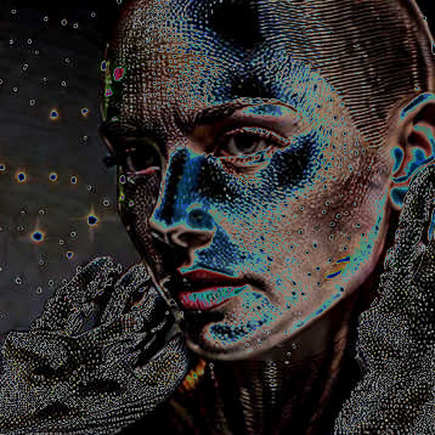
The response from regulators will likely be swift and heavy-handed, mandating detection software for financial institutions. This is a necessary but insufficient step. Detection is a reactive game of whack-a-mole; every new detection model is met with an adversarial model designed to evade it. The only durable solution is to shift the burden of proof. We must move from a model of 'trust but verify' to 'verify before trust' at the protocol level. This means embedding identity verification and content provenance into the transaction layer itself, using cryptographic primitives that are computationally infeasible to fake. This is where blockchain's role becomes critical—not as a currency, but as a settlement layer for truth.

The $3.8 million was not just stolen; it was a down payment on a future where every video call, every voice message, and every digital interaction is suspect. The question is not whether this will happen again—it will, at scale. The question is whether our institutions have the foresight to rebuild their trust infrastructure from the ground up, or if they will continue to pay the price for trusting what they see on a screen. The era of 'seeing is believing' is over. The era of 'proving is trusting' has begun. What will your institution's next video call cost you?